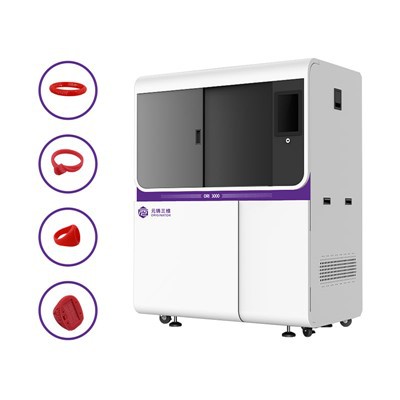
In the ever – evolving world of 3D printing, wax materials have carved out a significant niche. As a dedicated 3D printing wax material supplier, I’ve spent countless hours exploring the capabilities and limitations of this unique medium. One of the most frequently asked questions in our industry is: What is the minimum feature size for 3D printing wax material? 3D Printing Wax Material
Understanding 3D Printing Wax Materials
Before delving into the minimum feature size, it’s essential to understand the nature of 3D printing wax materials. Wax has been used in various industries for centuries, from candle – making to jewelry casting. In the context of 3D printing, wax materials offer distinct advantages. They are easy to melt, which is crucial for investment casting processes. Additionally, they can be formulated to have excellent flow properties, allowing for smooth and detailed prints.
There are different types of wax materials available for 3D printing, including paraffin – based waxes, microcrystalline waxes, and synthetic waxes. Each type has its own set of characteristics, such as melting point, viscosity, and shrinkage rate. These properties can significantly impact the minimum feature size that can be achieved during 3D printing.
Factors Affecting the Minimum Feature Size
Printer Technology
The type of 3D printing technology used plays a crucial role in determining the minimum feature size. For example, stereolithography (SLA) is a popular method for printing wax models. SLA printers use a laser to cure liquid resin layer by layer. The resolution of an SLA printer is typically measured in microns, and some high – end SLA printers can achieve a resolution of 25 – 50 microns. This high resolution allows for the creation of very fine features, such as thin walls and intricate details.
On the other hand, fused deposition modeling (FDM) printers, which extrude molten wax through a nozzle, generally have a lower resolution compared to SLA printers. The minimum feature size for FDM – printed wax models is often in the range of 200 – 500 microns. This is because the nozzle size and the layer height of FDM printers limit the level of detail that can be achieved.
Wax Material Properties
The properties of the wax material itself also have a significant impact on the minimum feature size. As mentioned earlier, the melting point, viscosity, and shrinkage rate of the wax are important factors. A wax with a high melting point may require more energy to melt and extrude, which can affect the precision of the print. Similarly, a wax with high viscosity may not flow smoothly through the printer nozzle, resulting in uneven prints and larger minimum feature sizes.
Shrinkage is another critical factor. When the wax cools and solidifies after printing, it may shrink. If the shrinkage is not uniform, it can cause distortion in the printed model, especially for small features. Our company has developed wax materials with low shrinkage rates to minimize this issue and allow for the creation of more precise models.
Design Considerations
The design of the 3D model also affects the minimum feature size. Complex designs with sharp corners, thin walls, and intricate details require a higher level of precision. For example, a model with a thin wall of 0.1 mm may be challenging to print, even with a high – resolution printer. Designers need to consider the capabilities of the printer and the wax material when creating their models. They may need to adjust the design to increase the minimum feature size or add support structures to ensure the integrity of the print.
Achievable Minimum Feature Sizes
Based on our experience and testing, the achievable minimum feature sizes for 3D printing wax materials can vary widely depending on the factors mentioned above.
SLA Printing
For SLA – printed wax models, the minimum feature size can be as small as 50 – 100 microns. This level of precision allows for the creation of highly detailed models, such as dental crowns, jewelry pieces, and small mechanical parts. With proper printer calibration and material selection, we have been able to produce wax models with features as small as 75 microns.
FDM Printing
In the case of FDM – printed wax models, the minimum feature size is typically in the range of 200 – 500 microns. While this is larger than the minimum feature size achievable with SLA printing, FDM still offers a cost – effective and accessible option for many applications. For example, FDM – printed wax models can be used for rapid prototyping and investment casting of larger parts.
Real – World Applications
The ability to achieve small feature sizes in 3D printing wax materials has opened up a wide range of real – world applications.
Jewelry Industry
In the jewelry industry, 3D printing wax models have revolutionized the design and production process. Designers can create intricate and detailed wax models using 3D printing technology, which can then be used for investment casting. The ability to print small features allows for the creation of delicate jewelry pieces with high – quality finishes.
Dental Industry
In the dental industry, 3D printing wax materials are used to create dental models, such as crowns, bridges, and dentures. The high precision of 3D printing allows for a perfect fit and accurate replication of the patient’s teeth. Small feature sizes are crucial for creating detailed dental models that can be used for precise dental restorations.
Aerospace and Automotive Industries
In the aerospace and automotive industries, 3D printing wax materials are used for rapid prototyping and investment casting of complex parts. The ability to print small features enables the production of lightweight and high – performance parts with intricate geometries.
Conclusion
In conclusion, the minimum feature size for 3D printing wax material is influenced by a variety of factors, including printer technology, wax material properties, and design considerations. While SLA printing generally allows for smaller feature sizes compared to FDM printing, both technologies have their own advantages and applications.
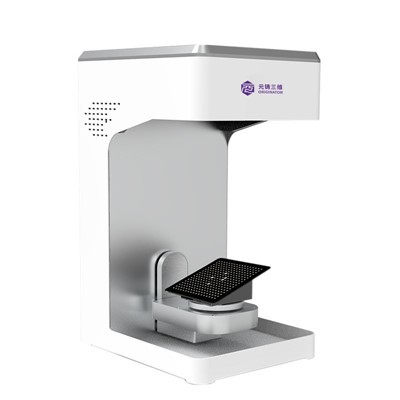
As a 3D printing wax material supplier, we are committed to providing high – quality wax materials that can meet the diverse needs of our customers. Our wax materials are formulated to have excellent flow properties, low shrinkage rates, and high precision, allowing for the creation of detailed and accurate 3D printed models.
Jewelry 3D Printer If you are interested in exploring the possibilities of 3D printing wax materials for your business, we invite you to contact us for a detailed discussion. Our team of experts is ready to assist you in selecting the right wax material and printer technology for your specific application. We look forward to working with you to bring your ideas to life.
References
- ASTM International. (2019). Standard Terminology for Additive Manufacturing—General Principles—Terminology. ASTM F2792 – 12a.
- Gibson, I., Rosen, D. W., & Stucker, B. (2015). Additive Manufacturing Technologies: 3D Printing, Rapid Prototyping, and Direct Digital Manufacturing. Springer.
- Wohlers, T., & Gornet, T. (2019). Wohlers Report 2019: 3D Printing and Additive Manufacturing State of the Industry. Wohlers Associates.
Hangzhou Originator 3D Technology Co., Ltd.
Hangzhou Originator 3D Technology Co., Ltd. is one of the most experienced 3d printing wax material manufacturers and suppliers in China. With abundant experience, we warmly welcome you to wholesale high quality 3d printing wax material made in China here from our factory. Contact us for more details.
Address: Room 403, Building 2, Block B, Heda Incubation Park,No. 452, 6th Avenue, Xiasha, Qiantang District,Hangzhou, Zhejiang, China
E-mail: Sales@originator3d.com
WebSite: https://www.originator3d.com/
