Hey there! I’m a supplier of industrial products, and I’ve been in this game for quite some time. One question that always comes up, both from my clients and in industry discussions, is how to measure the return on investment (ROI) of industrial products. It’s a crucial topic because understanding ROI helps businesses make smart decisions about which products to invest in and which ones might not be worth the money. Industrial Products

Let me break it down for you. ROI is essentially a way to figure out how much profit you’re making from an investment compared to how much you spent on it. In the context of industrial products, this could mean everything from heavy machinery to safety equipment.
First off, let’s look at the basic formula for ROI. It’s pretty simple: ROI = (Net Profit / Cost of Investment) x 100. But how do we calculate the net profit and the cost of investment when it comes to industrial products?
The cost of investment is usually the easiest part. It includes the purchase price of the product, any shipping or handling fees, installation costs, and training if your employees need to learn how to use the product. For example, if you’re buying a new CNC machine for your factory, the cost of investment would be the price of the machine itself, the money it takes to get it to your facility, the cost of having technicians install it, and the cost of training your workers to operate it.
Now, let’s talk about the net profit. This is where things get a bit tricky. Net profit is the total revenue generated from using the product minus all the associated costs. In the case of the CNC machine, the revenue might come from the additional products you can produce and sell because of the machine. The associated costs could include maintenance fees, energy costs to run the machine, and any additional labor costs if you need to hire more workers to keep up with the increased production.
One way to measure the additional revenue is to look at the production volume before and after the purchase of the industrial product. Let’s say your factory was producing 100 units per day before getting the new CNC machine, and after installing it, you’re able to produce 150 units per day. If each unit sells for $10, then you’re generating an additional $500 in revenue per day. Over a month (assuming 20 working days), that’s an extra $10,000 in revenue.
But we can’t just stop there. We also need to subtract the associated costs. The CNC machine might cost $500 in maintenance per month, $300 in additional energy costs, and if you had to hire a part – time worker at $200 per month, then the total associated costs are $1000 per month. So, the net profit per month from the CNC machine is $10,000 – $1000 = $9000.
Now, let’s assume the total cost of investment for the CNC machine was $50,000. Using the ROI formula, we have: ROI = ($9000 / $50,000) x 100 = 18%. This means that for every dollar you invested in the CNC machine, you’re getting an 18 – cent return.
Another important aspect to consider when measuring ROI is the pay – back period. This is the amount of time it takes for the net profit to equal the cost of investment. In our CNC machine example, the pay – back period would be $50,000 / $9000 ≈ 5.56 months. So, it would take a little over five and a half months to recoup the initial investment.
In some cases, the ROI of industrial products might not be as straightforward. For instance, when you’re buying safety equipment like helmets or gloves for your workers, the direct revenue might not be obvious. However, the indirect benefits can be significant. By providing safety equipment, you can reduce the number of workplace accidents, which in turn can lower insurance premiums and prevent costly lawsuits.
Let’s say your company was paying $100,000 per year in workers’ compensation insurance. After investing $10,000 in high – quality safety equipment, your insurance premium drops to $90,000 per year. The net profit from this investment is $10,000 per year. Using the ROI formula, ROI = ($10,000 / $10,000) x 100 = 100%. And the pay – back period is just one year.
When I’m talking to my clients about ROI, I always stress the importance of long – term thinking. Some industrial products might have a high initial cost but offer significant savings or revenue generation over time. Take energy – efficient motors as an example. They might cost more upfront than traditional motors, but they consume less energy, which can lead to substantial cost savings in the long run.
Let’s say an energy – efficient motor costs $5000 more than a traditional motor. But it saves $1000 per year in energy costs. The pay – back period for this investment is five years. Over a 10 – year period, you’ll save a total of $10,000, and the ROI would be ($10,000 / $5000) x 100 = 200%.
I also tell my clients to consider the intangible benefits of industrial products. For example, investing in high – quality machinery can improve the quality of your products, which can lead to better customer satisfaction and a stronger brand reputation. This, in turn, can help you attract more customers and increase your market share.
As a supplier, I always try to provide my clients with as much information as possible to help them calculate the ROI of my products. I can give them detailed cost breakdowns, estimated savings, and even case studies of other companies that have used my products successfully.
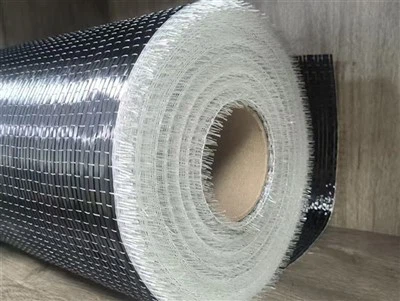
If you’re a business owner trying to figure out the ROI of industrial products for your operations, I’d love to have a chat with you. Measuring ROI can be complex, but with the right data and a bit of analysis, you can make informed decisions. Whether you’re looking for a new piece of machinery to boost production or safety equipment to protect your workers, I can work with you to understand how my products can fit into your business strategy and provide a great return on investment. So, if you’re interested in learning more or want to start a procurement discussion, don’t hesitate to reach out. Let’s work together to find the industrial products that will make your business more profitable.
Carbon Fiber References:
- "Financial Management for Non – Financial Managers" by John Argue
- "Industrial Engineering and Management" textbooks commonly used in engineering courses
Jiaxing Rongjin Intelligent Technology Co., Ltd.
As one of the most professional industrial products suppliers in China, we have world-leading production equipment and strong manufacturing capabilities. Please rest assured to buy high quality industrial products in stock here from our factory. Contact us for quotation.
Address: No.503, Building 1, Xicundai Road 228, Honghe Town, Xiuzhou District, Jiaxing City, Zhejiang Province, China
E-mail: vivi@rongjinsmart.com
WebSite: https://www.carbonfibers-china.com/
