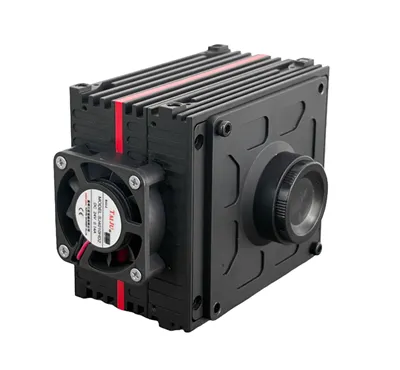
In the realm of advanced sensing technologies, Short-Wave Infrared (SWIR) sensors have emerged as a powerful tool with a wide range of applications. As a leading SWIR sensor supplier, I am often asked about how these sensors operate in the presence of artificial light. In this blog post, I will delve into the science behind SWIR sensors and explain how they function effectively even in environments illuminated by artificial sources. SWIR Sensor
Understanding SWIR Sensors
SWIR sensors are designed to detect light in the short-wave infrared spectrum, which ranges from approximately 900 to 1700 nanometers. This region of the electromagnetic spectrum offers several advantages over visible light and other infrared bands. For instance, SWIR light can penetrate certain materials, such as plastics, glass, and some types of foliage, making it ideal for applications like industrial inspection, food sorting, and remote sensing.
The basic principle behind SWIR sensors is the conversion of incoming SWIR light into an electrical signal. This is typically achieved using semiconductor materials that have a bandgap energy corresponding to the SWIR spectrum. When SWIR photons strike the sensor’s active area, they generate electron-hole pairs, which can be collected and measured as an electrical current. The intensity of the electrical current is proportional to the intensity of the incident SWIR light, allowing the sensor to create an image or measure the light’s properties.
The Impact of Artificial Light on SWIR Sensors
Artificial light sources, such as incandescent bulbs, fluorescent lamps, and light-emitting diodes (LEDs), emit light across a wide range of wavelengths, including the visible and infrared spectra. While these sources may not emit significant amounts of SWIR light directly, they can still have an impact on SWIR sensor performance.
One of the main challenges is the presence of ambient light, which can introduce noise and reduce the signal-to-noise ratio (SNR) of the sensor. Ambient light can also cause saturation of the sensor, especially if the light intensity is too high. This can lead to loss of detail and accuracy in the captured images or measurements.
Another issue is the spectral characteristics of the artificial light source. Different types of artificial light emit light with different spectral distributions, which can affect the response of the SWIR sensor. For example, some LEDs may emit light in the near-infrared (NIR) region, which can interfere with the SWIR signal and cause false readings.
Strategies for Operating SWIR Sensors in Artificial Light
Despite these challenges, there are several strategies that can be employed to ensure the effective operation of SWIR sensors in the presence of artificial light.
Filtering
One of the most common approaches is the use of optical filters. These filters can be designed to block unwanted wavelengths of light, such as visible light and NIR, while allowing SWIR light to pass through. By using a filter, the sensor can be made more selective to the SWIR spectrum, reducing the impact of ambient light and improving the SNR.
There are different types of filters available, including bandpass filters, which allow only a specific range of wavelengths to pass through, and long-pass filters, which block shorter wavelengths and allow longer wavelengths to pass. The choice of filter depends on the specific application and the spectral characteristics of the artificial light source.
Signal Processing
Another strategy is to use signal processing techniques to enhance the SWIR signal and reduce noise. This can involve algorithms for background subtraction, noise reduction, and image enhancement. By analyzing the captured data and removing unwanted components, the sensor can provide more accurate and reliable results.
For example, background subtraction can be used to remove the contribution of ambient light from the SWIR signal. This involves capturing a reference image without the object of interest and subtracting it from the image with the object. This can help to isolate the SWIR signal and improve the contrast and clarity of the image.
Calibration
Calibration is also an important step in ensuring the accurate operation of SWIR sensors in artificial light. By calibrating the sensor, the effects of the artificial light source can be compensated for, and the sensor can be made more accurate and reliable.
Calibration typically involves measuring the response of the sensor to a known SWIR light source under different conditions, such as different light intensities and wavelengths. This data can then be used to create a calibration curve, which can be used to correct the sensor’s output and ensure that it is accurate and consistent.
Applications of SWIR Sensors in Artificial Light Environments
SWIR sensors have a wide range of applications in artificial light environments. Some of the most common applications include:
Industrial Inspection
In industrial settings, SWIR sensors can be used for quality control and inspection of products. For example, they can be used to detect defects in plastics, glass, and other materials, as well as to measure the thickness and density of coatings. SWIR sensors can also be used to detect contaminants and impurities in food and pharmaceutical products.
Security and Surveillance
SWIR sensors can be used for security and surveillance applications, such as monitoring of critical infrastructure, airports, and border crossings. They can be used to detect intruders, vehicles, and other objects in low-light conditions, as well as to identify hidden weapons and contraband.
Remote Sensing
SWIR sensors can be used for remote sensing applications, such as mapping of land use, vegetation, and water resources. They can be used to detect changes in the environment, such as deforestation, urbanization, and water pollution. SWIR sensors can also be used to monitor the health and growth of crops and to detect pests and diseases.
Conclusion
In conclusion, SWIR sensors are a powerful tool for a wide range of applications, even in the presence of artificial light. By understanding the science behind SWIR sensors and employing strategies such as filtering, signal processing, and calibration, it is possible to ensure their effective operation in artificial light environments.
Optoelectronic Systems As a SWIR sensor supplier, we are committed to providing high-quality sensors and solutions that meet the needs of our customers. If you are interested in learning more about our SWIR sensors or have any questions about their operation in artificial light environments, please do not hesitate to contact us. We would be happy to discuss your specific requirements and provide you with the information and support you need.
References
- "Short-Wave Infrared (SWIR) Imaging: Principles and Applications" by John R. Schrieber
- "Optical Filters for SWIR Imaging" by Edmund Optics
- "Signal Processing for SWIR Sensors" by IEEE Transactions on Image Processing
Xi’an Zhongke Lead Ir-Tech Co., Ltd.
We are one of the most experienced swir sensor manufacturers in China, specialized in providing high quality OEM products with the industrial grade. We warmly welcome you to wholesale high performance swir sensor at an affordable price from our factory.
Address: Building 8,Hard Technology Enterprise Community No.3000,Biyuan 2nd Rd,High-Tech Zone Xi’an,Shaanxi,China
E-mail: sales@lead-ir.com
WebSite: https://www.leadinfrared.com/
